01–02
Define
Feasibility, product definition and industrial design
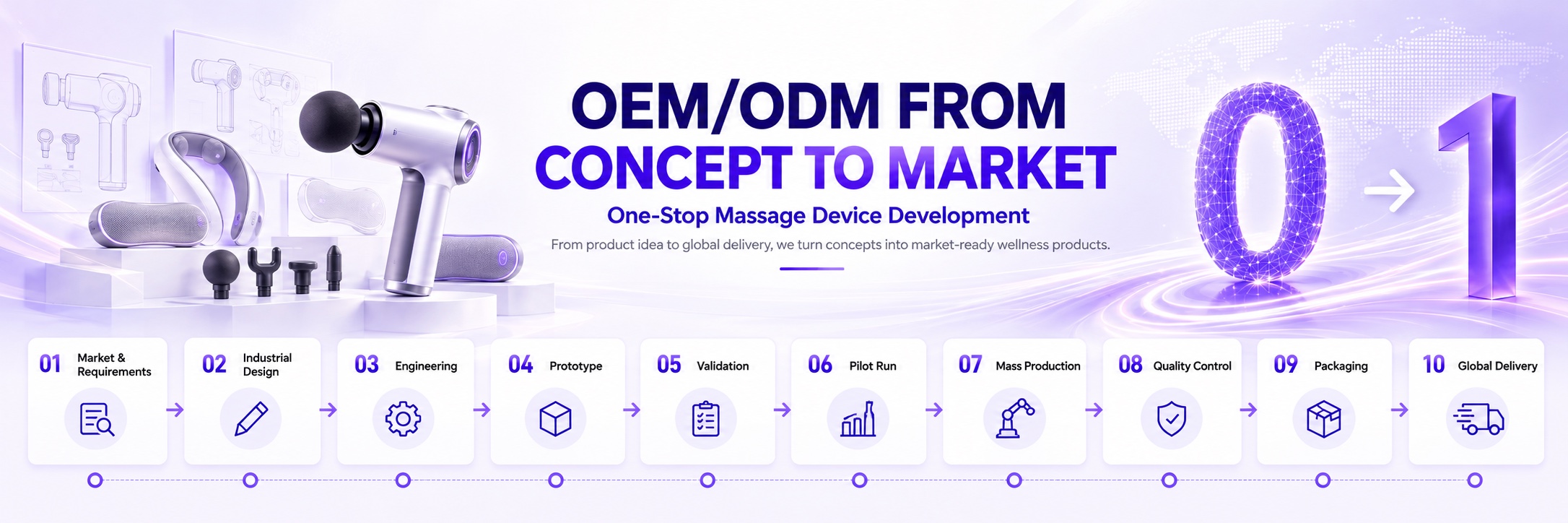
OEM/ODM massage device development
From brief and engineering to validation, controlled production and delivery, JAMOOZ helps turn your concept into a production-ready device. Scope, timing and cost are confirmed for each project.
End-to-end workflow
The project moves from definition and engineering through controlled production, final inspection and delivery. The exact sequence and records are adjusted to the product, customisation depth and destination-market requirements.
01–02
Feasibility, product definition and industrial design
03
3D engineering, structure, electronics and preliminary BOM
04–05
Functional sample, verification and compliance plan
06–07
DFM, supply readiness, pilot run and approved sample
08–10
Process QC, final inspection, packaging and dispatch
Stage-by-stage review
Each stage is tied to a practical project record or buyer approval point. The standard production schedule is published separately, while project-specific exceptions, capacity and certification scope remain subject to verification.
Define the target market, intended users, core requirements, expected quantity and project constraints before product decisions begin.
Review record: Approved project brief and feasibility review
Translate the approved brief into product concepts, ergonomics, appearance, colours, materials and finishes.
Review record: Approved concept, ergonomics and CMF direction
Develop the 3D model, product structure, electronics layout and preliminary bill of materials required for a buildable design.
Review record: Reviewed CAD, structure, electronics and preliminary BOM
Build a functional prototype, evaluate key functions and ergonomics, and record the revisions needed before validation.
Review record: Prototype build, buyer feedback and revision list
Run the agreed performance, safety and reliability checks and confirm the compliance plan for the destination market.
Review record: Verification plan, applicable results and open-issue record
Review manufacturability, tooling or fixtures, component availability and supplier readiness before trial production.
Review record: DFM review, tooling status and supplier-readiness record
Run a controlled small batch to verify the process, product consistency and approved reference sample before mass production.
Review record: Pilot-run results and approved pre-production sample
Produce against the approved specification with incoming, in-process and traceability controls defined for the order.
Review record: Production plan and applicable IQC/IPQC records
Complete the agreed final inspection or sampling checks, then pack products using the artwork and packaging approved before production.
Review record: Final-inspection record and approved packing specification
Confirm finished-goods storage, carton information, shipping terms, destination and dispatch arrangements for the order.
Review record: Carton, shipping and dispatch documents
Quality control during production
After the product and approved sample are confirmed, quality checkpoints continue through incoming materials, production, applicable testing, packing and shipment release.
The exact test items, conditions, sampling approach and available records are confirmed for the selected model, order and destination market.
Check applicable components, materials and appearance against the approved product specification before production use.
Monitor defined assembly and appearance checkpoints during production so issues can be identified before final assembly.
Verify agreed functions, controls, charging behaviour and applicable safety items for the selected model.
Apply the agreed powered-operation, cycle or reliability checks when they are included in the product or order plan.
Check product appearance, quantity, accessories, labels, packaging and carton information before shipment release.
JAMOOZ verification & credentials
Supplier assessments, management-system certificates and product test records answer different sourcing questions. Review each document against the entity, model and market it actually covers.
01 / SUPPLIER ASSESSMENT
Supplier assessment
Company information and assessed capabilities are documented within the scope of the independent supplier-assessment report.
Assessment date: 24 July 2026
The findings apply to the named entity, stated scope and assessment date. They do not certify every model or production batch.
02 / QUALITY MANAGEMENT
Quality management system
The certificate scope, named entity, covered activities and validity period are reviewed against the requirements of each project.
Certificate-scope review
Management-system certification is separate from certification or regulatory approval of a particular product.
03 / PRODUCT DOCUMENTS
Product documentation
Applicable CE-related documents, FCC reports and EN-standard test records are checked for the selected model and configuration.
Model + destination market
The available document set depends on the exact product version, electrical configuration and intended destination market.
04 / INTELLECTUAL PROPERTY
Product and design records
Relevant patent or design records can be reviewed when evaluating a product direction and its customisation scope.
Product-specific records
Rights, ownership, territory and current status are checked against the original record before they are cited for a project.
Evidence review path
Use the same three checks before relying on a supplier credential. This keeps a company assessment, a quality-system certificate and a product test report from being treated as interchangeable proof.
View the factory-audit checklist →01
Confirm the named entity, report number, assessment date and stated assessment scope.
02
Confirm the certificate holder, covered activities, issuing body and validity period.
03
Match each report to the exact model, configuration, test standard and destination market.
Tell us the model and destination market. We will confirm the applicable document scope and what can be shared for your sourcing review.
Full reports are not publicly downloadable here. Destination-specific registrations, including EPR where applicable, are reviewed separately.
Confirmed standard options
Standard branding and packaging minimums are listed below. The standard schedule is 7 days for samples after design approval, 15 days for 50 pcs, 20 days for 500 pcs and 35 days for 3,000 pcs; special project conditions are reviewed separately.
Open the customisation configuratorContext-ready inquiry
The form is already labelled as an OEM/ODM development project. Add your target market, estimated quantity, key functions and packaging needs so the first reply can address the right scope.